
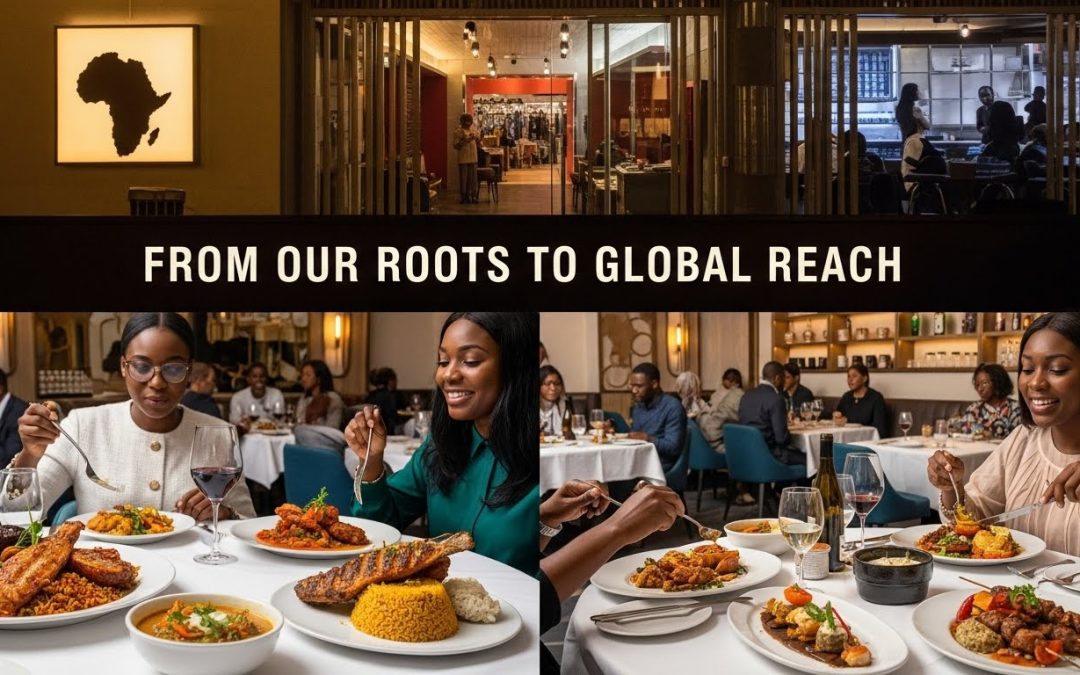
Remember when you first tried to explain jollof rice to your non-Nigerian friends? “It’s like… rice, but make it magical,” you probably said, watching their confused faces as you desperately tried to capture the essence of that perfect blend of tomatoes, spices, and pure Nigerian genius in words that didn’t exist in their vocabulary.
Fast forward to 2025, and suddenly everyone’s talking about Nigerian cuisine. Your local grocery store stocks palm oil, your favorite food blogger just posted about suya spice, and that trendy restaurant downtown? They’re serving “deconstructed jollof” for $28 a plate. (Yes, we’re all equally offended.)
But here’s the beautiful truth: We did this.The Nigerian diaspora – all of us who carried grandma’s recipes in our hearts and maggi cubes in our suitcases – we’re the ones who turned Nigerian cuisine from a well-kept secret into a global phenomenon.
The Accidental Ambassadors: How Homesickness Became a Movement
Let’s be real for a moment. Most of us didn’t set out to become cultural ambassadors. We just wanted to eat properly. Remember your first week abroad? You probably stood in the international aisle of some foreign supermarket, holding a can of tomato paste, wondering if it would somehow transform into the tomato stew of your dreams. (Spoiler alert: it didn’t.)
But something magical happened in those early days of diaspora life. Out of necessity, we became innovators. When we couldn’t find plantain, we made do with bananas and prayers. When scotch bonnet peppers were nowhere to be found, we created fusion dishes that would make our grandmothers both proud and slightly confused.
The Kitchen Laboratories of Longing
Every Nigerian kitchen in the diaspora became a laboratory where tradition met innovation. We experimented, we adapted, we sometimes cried over failed attempts at recreating mama’s egusi. But we never gave up. And slowly, something beautiful emerged from these kitchen experiments.
Timeline: The Jollof Revolution
Year 2015: Nigerian restaurants in major cities start gaining recognition
Year 2018: #JollofWars trends globally on social media
2020: Major food networks feature Nigerian cuisine segments
2022 Nigerian fusion restaurants earn Michelin recognition
2024: Jollof rice becomes available in mainstream grocery stores
The Social Media Spice Route: How We Seasoned the Internet
Social media became our secret weapon. While other cuisines had centuries of global presence, we had something better: authentic voices, compelling stories, and content that made people’s mouths water through their screens.
Food Content Creators Changed Everything
From the auntie who started posting her cooking videos “just for the family” to the young professionals documenting their weekend meal prep, Nigerian food content creators didn’t just share recipes – they shared culture, history, and love.
The Formula for Viral Nigerian Food Content:
- Authenticity over perfection: Messy kitchens and honest commentary
- Storytelling: Every dish comes with a memory
- Community engagement: Comment sections became recipe exchanges.
- Visual appeal: Nigerian food is naturally photogenic
- Cultural education: Teaching while entertaining
The Economics of Nostalgia: Building Billion-Dollar Bridges
What started as homesickness evolved into serious business. The global Nigerian food market is now worth billions, and diaspora entrepreneurs are at the forefront of this economic revolution.
Success Stories That Inspire
Restaurant Revolution:
From food trucks to fine dining, Nigerian restaurants are reshaping culinary landscapes worldwide. Cities like London, New York, and Toronto now boast thriving Nigerian food scenes that attract both nostalgic diaspora and curious locals.
Product Innovation: Remember when finding palm oil required a treasure hunt? Now diaspora entrepreneurs have created supply chains that bring authentic Nigerian ingredients to mainstream markets globally.
Digital Platforms:
Food delivery apps, online grocery stores, and cooking platforms specifically catering to African cuisine have created entirely new markets.
The Cultural Preservation Project: More Than Just Food
Here’s where it gets emotional (grab your tissues). What we’ve accomplished goes beyond business success or social media fame. We’ve created a bridge between generations, cultures, and continents.
Teaching Through Taste
Every time we cook Nigerian food for our non-Nigerian friends, we’re doing more than sharing a meal. We’re sharing history, values, and identity. When little Kemi in Canada learns to make moin moin from her grandmother via video call, we’re preserving culture across oceans.
The Ripple Effect
- Language preservation: Cooking videos preserve Nigerian languages
- Cultural exchange: Non-Nigerians learn about Nigerian culture through food.
- Economic empowerment: Creates opportunities for Nigerian farmers and producers
- Identity strengthening: Helps second-generation diaspora connect with their heritage
The Challenges We’ve Overcome (And Those We’re Still Fighting)
Let’s not sugarcoat it – the journey hasn’t been all jollof and jolly. We’ve faced skepticism, cultural appropriation, and the occasional “Is this actually food?” comment that made us question humanity.
The Authenticity Debates
The moment Nigerian cuisine gained global recognition, the authenticity police showed up. “That’s not how mama made it!” became the battle cry of purists, while innovators argued for evolution and adaptation.
The Reality Check: Food evolves. The jollof rice your grandmother made was probably different from her grandmother’s version. Culture isn’t preserved in amber – it lives, breathes, and adapts.
Fighting Cultural Appropriation
When big brands started selling “African-inspired” products without involving African communities, we had to become advocates, not just ambassadors. The diaspora learned to protect our culinary heritage while still promoting its growth.
The Future is Flavored: What’s Next for Nigerian Cuisine
As we look ahead, the possibilities are as endless as the variations of jollof rice recipes (and yes, we’re still fighting about which country does it best).
Trends to Watch
Plant-Based Nigerian Recipes: The intersection of traditional Nigerian cuisine with global dietary trends
Molecular Gastronomy: High-end restaurants experimenting with Nigerian flavors
Fusion Innovations: Nigerian-influenced cuisines emerging in various cultural contexts
Sustainable Sourcing: Connecting diaspora markets directly with Nigerian producers
The Next Generation of Food Ambassadors
Generation Z diaspora Nigerians are taking our culinary diplomacy to new heights. They’re not just preserving tradition – they’re reimagining it for a global audience while staying true to their roots.
The Recipe for Continued Success
So, what’s the secret sauce to our continued success? (Besides the actual secret sauce that every Nigerian family guards like state secrets.)
Key Ingredients for Global Domination:
- Authenticity: Never lose sight of where we come from
- Innovation: Adapt without compromising core identity
- Community: Support each other’s culinary ventures
- Education: Keep sharing the stories behind the spices
- Quality: Maintain high standards that honor our heritage
- Inclusivity: Welcome others into our food culture
- Sustainability: Build systems that benefit home and host communities
The Taste of Home, Shared Worldwide
As I write this, somewhere in the world, a Nigerian is teaching a non-Nigerian friend how to properly season their rice. Somewhere else, a second-generation diaspora child is learning their grandmother’s soup recipe via FaceTime. In another corner of the globe, a Nigerian restaurant is earning its first Michelin star.
This is our legacy – not just the food, but the connections we’ve created, the barriers we’ve broken, and the bridges we’ve built. We took the flavors of home and made them flavors of the world.
The Emotional ROI
The return on investment isn’t just measured in dollars or social media followers. It’s in the tears of joy when someone tastes properly made jollof rice for the first time in years. It’s in the pride of watching our culture gain the recognition it deserves. It’s in the knowledge that we’ve preserved something precious while sharing it generously.
A Toast to the Taste Makers
To every Nigerian who’s ever stood in a foreign kitchen, desperately trying to recreate the magic of home cooking with whatever ingredients they could find – this one’s for you. To every entrepreneur who saw opportunity in our culinary heritage, every content creator who shared their family recipes, every chef who elevated our cuisine to fine dining status – you are the real MVPs.
We didn’t just bring Nigerian food to the world. We brought Nigerian heart, Nigerian creativity, and Nigerian resilience. We proved that culture isn’t just something you preserve – it’s something you share, adapt, and elevate.
The journey from our roots to global reach wasn’t planned, but it was powerful. And honestly? We’re just getting started.
**Fun fact**: The next time someone asks you about Nigerian food, you can proudly say we’ve gone from explaining what jollof rice is to watching the world fight over how to make it properly. That’s not just cultural export – that’s cultural victory.
What’s your favorite Nigerian dish that you’ve successfully introduced to non-Nigerian friends? Share your food diplomacy stories in the comments below! And remember, whether you’re team Nigerian jollof or team Ghanaian jollof, we can all agree that the real winner is everyone who gets to taste either version.
#NigerianCuisine #DiasporaLife #TribesOfAndrew
#JollofRice
#NigerianFood
#FoodCulture #CulturalPreservation #NigerianDiaspora #GlobalCuisine #FoodInnovation
- Join the conversation at https://TribesOfAndrew.com – where Nigerian diaspora voices matter, and every story seasoned with authenticity.