
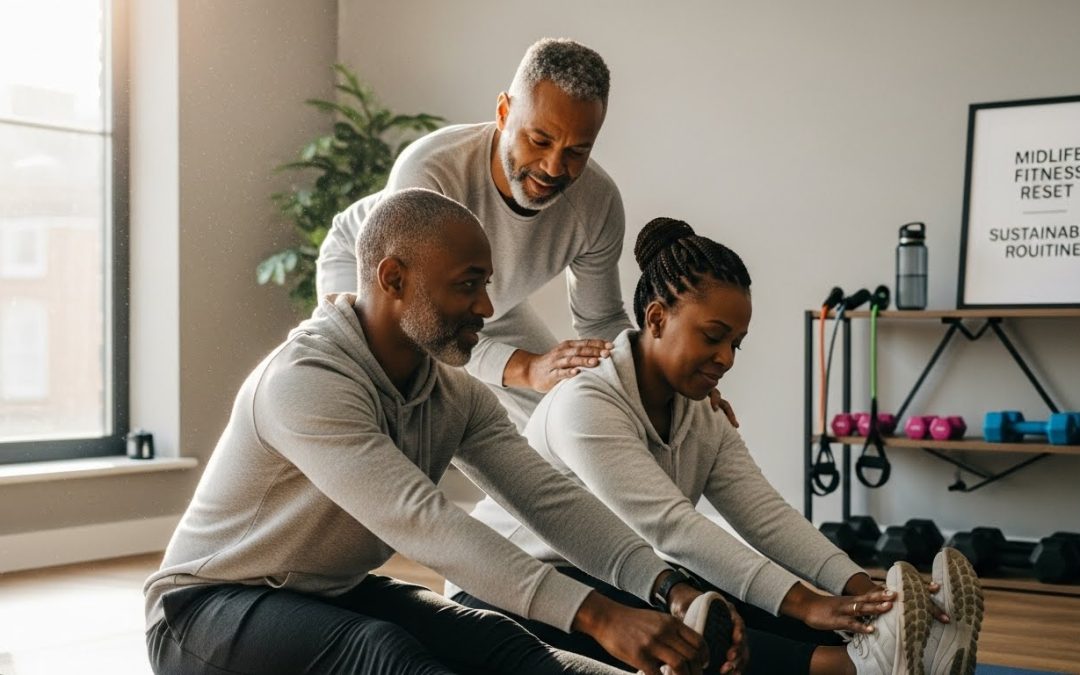
Remember when you could play football from morning till dusk, dance all night at owambe, or lift heavy loads without feeling it the next day? Your body hasn’t forgotten those days. It just needs a smarter approach now.
For Nigerians in the diaspora stepping into their 50s, fitness is no longer about proving anything or chasing your younger self. It’s about staying strong, mobile, and independent—so your body supports the life you want to live.
Why Fitness After 50 Is Different (and Better When Done Right)
As we age, our metabolism slows—about 2–8% each decade after 50. Joints carry years of wear, and muscle mass quietly declines if we don’t challenge it. But here’s the good news: movement done intentionally can slow, stop, and even reverse many of these changes.
This stage of life isn’t about “managing decline.” It’s about rebuilding wisely.
The Three Pillars of Midlife Fitness
1. Strength Training: Your Metabolism’s Best Friend
You don’t need long gym sessions or heavy weights. Just two or three 30-minute strength workouts a week can rebuild muscle—and muscle burns calories even when you’re resting.
Start simple. Squats, wall push-ups, planks. As your confidence grows, add resistance bands or light dumbbells. Focus on movements that mirror everyday life: standing up from a chair, lifting groceries, climbing stairs.
This isn’t about looking like a bodybuilder. It’s about being strong enough to live independently, confidently, and without fear of injury for years to come.
2. Low-Impact Cardio: Heart Health Without Joint Pain
Walking briskly, swimming, cycling, dancing—these are powerful forms of cardio that don’t punish your knees and hips. Aim for about 150 minutes a week. That’s just 30 minutes, five days a week. Short on time? Three 10-minute walks count just as much.
For many in our community managing high blood pressure or diabetes, this kind of consistent movement is real medicine. It helps regulate blood sugar, supports heart health, and improves overall energy. The key is enjoyment—choose something you’ll actually stick with.
3. Flexibility and Balance: Your Safety Net
Stiff joints can make you feel older than you are. Gentle stretching, yoga, or tai chi keeps your body fluid and mobile. Simple balance drills—standing on one foot while brushing your teeth or walking heel-to-toe—can dramatically reduce fall risk later in life.
Ten minutes a day is enough. Your back, hips, and shoulders will reward you with smoother, pain-free movement.
Making Fitness Stick This Time
Start where you are.
If you’ve been inactive, begin with a 10-minute daily walk. Add five minutes each week. reminds you that consistency beats intensity every time.
Protect your workout time.
Treat exercise like a fixed appointment—just like church or an important meeting. Morning routines often work best before life gets in the way.
Respect your body.
Pain is not progress. If something hurts, adjust it. Lighter weight, fewer reps, or a different movement entirely. The goal is longevity, not ego.
Don’t do it alone.
Walk with friends, join a group, or connect with fellow Tribes of Andrew members on the same journey. Community turns discipline into joy.
Small Habits That Multiply Results
Movement doesn’t end with workouts. Take the stairs, park farther away, stand while on phone calls, dance while cooking. These small “movement snacks” add up fast.
Support your efforts with enough protein (about 25–30g per meal), good sleep, and plenty of water. A healthy metabolism isn’t built in the gym alone—it’s a lifestyle working together.
Your Reset Begins Today
You don’t need fancy equipment or a gym membership to start. You just need a decision—and the patience to stay consistent.
Your 50s can be your strongest, most energetic decade yet.
What’s the first step you’re committing to? Share it below. Accountability starts now.