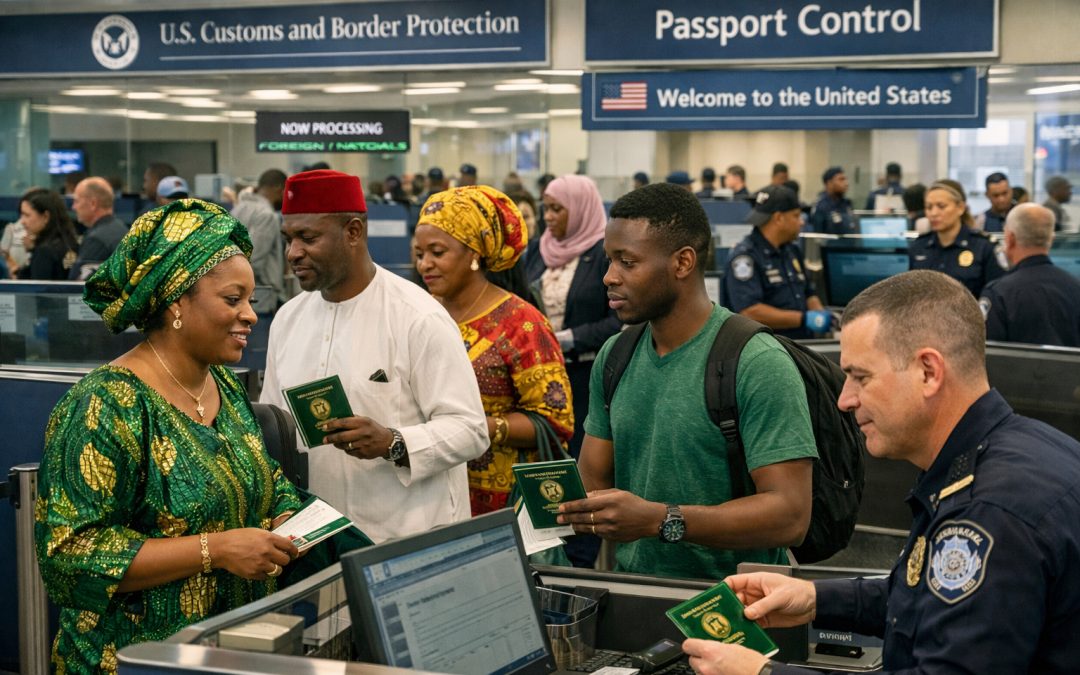
The landscape of U.S.–Nigeria relations took a sharp turn this week as the White House officially expanded its travel restrictions, listing Nigeria among 15 nations facing new partial entry bans. Set to take effect on January 1, 2026, this policy marks a significant hurdle for one of the most vibrant immigrant communities in the United States.
What is changing?
Unlike a total ban, Nigeria’s "partial" status specifically targets new applications for immigrant visas and key non-immigrant categories, including B-1/B-2 (Visitor), F (Student), M (Vocational), and J (Exchange) visas. The administration cited Nigeria's high visa overstay rate—allegedly exceeding 10% for certain categories—and vetting deficiencies as the primary drivers for this decision.
Implications for the Diaspora
For the Nigerian diaspora already living in the U.S., the impact is twofold: emotional and logistical.
1. Family Reunification: Perhaps the most painful aspect is the suspension of immigrant visas for immediate relatives. Nigerians in the U.S. hoping to bring over spouses, children, or parents will find those pathways largely frozen.
2. Educational Pipeline: As a top-10 source for international students, Nigeria’s academic contribution to the U.S. is at risk. Prospective students planning for the Fall 2026 semester now face a closed door.
3. Current Residents: Lawful Permanent Residents (Green Card holders) and those with already-issued, valid visas are exempt. However, the diaspora should expect heightened "enhanced screening" at ports of entry and potential delays in renewing existing non-immigrant status.
While the news is sobering, it is important to note that case-by-case waivers remain available for those whose entry is deemed in the "U.S. national interest." For now, the community must prioritize legal consultation and ensure all documentation for those already in the U.S. is impeccably maintained before the New Year’s Day deadline.