
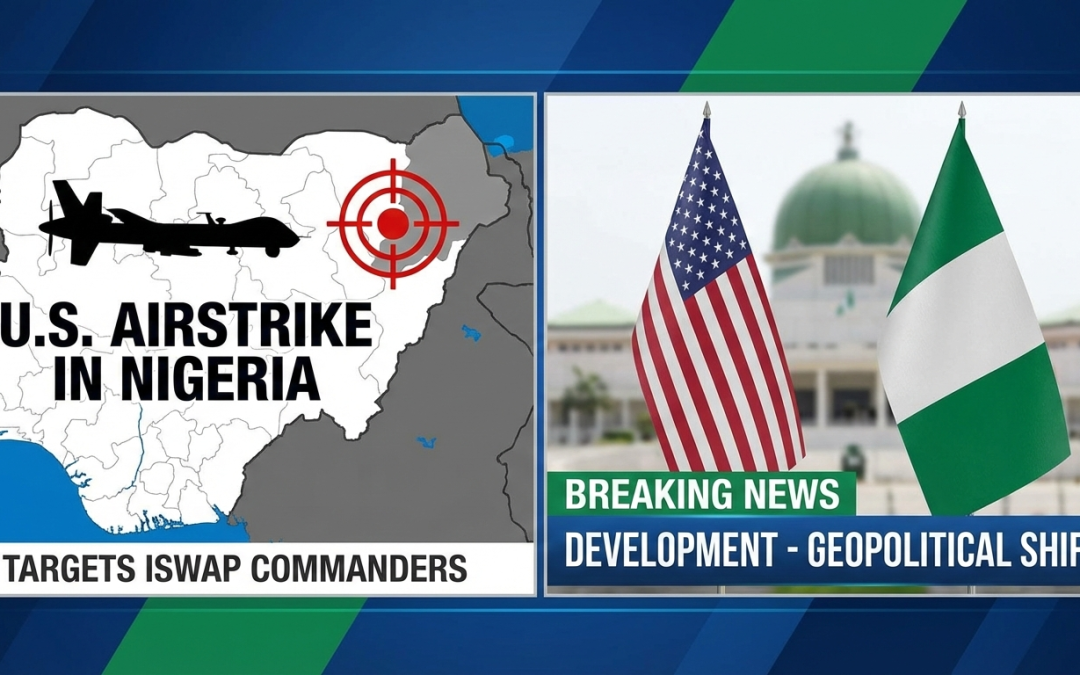
In a significant and rapidly developing story, U.S. forces have carried out an air strike in Nigerian territory. Early reports indicate this was a precision operation targeting a high-level meeting of ISIS-affiliated militants in the northeastern region of the country.
The Details We Know So Far:
According to statements from U.S. Africa Command (AFRICOM), the strike was authorized following actionable intelligence on a gathering of senior commanders of ISIS-West Africa Province (ISWAP). The operation, conducted in coordination with the Nigerian government, reportedly utilized unmanned aerial systems. Initial assessments suggest several key terrorist figures were neutralized, with no civilian casualties reported. AFRICOM emphasized the strike was conducted under collective self-defense authorities.
Why This Matters:
While the U.S. has long provided intelligence, training, and advisory support to Nigerian forces battling Boko Haram and ISWAP, direct kinetic action by U.S. assets on Nigerian soil is a notable escalation. This move signals a potential shift in strategy, likely prompted by:
-
An increased, direct threat to U.S. interests or personnel in the region.
-
A critical opportunity to degrade ISWAP’s leadership structure.
-
Evolving security agreements between the U.S. and Nigerian administrations.
The Geopolitical Context:
Nigeria’s northeast has been plagued by insurgency for over a decade. This U.S. action underscores the international dimension of the conflict and the persistent global concern over terrorist safe havens in the Sahel. It also highlights the delicate balance of sovereignty versus international counter-terrorism cooperation. The Nigerian government’s public stance—whether it frames this as vital assistance or a complex infringement on sovereignty—will be crucial to watch.
Reactions and Next Steps:
Local responses are still emerging. Regional security analysts are weighing the tactical success against potential strategic repercussions, including possible retaliatory attacks or militant regrouping. Human rights organizations are calling for full transparency regarding casualty assessments.
The Bottom Line:
This strike is more than a tactical operation; it’s a strategic signal. It demonstrates a willingness by the U.S. to take direct action in regions where terrorist groups have consolidated power. The long-term implications for U.S.-Nigeria relations, the balance of power among jihadist groups in West Africa, and the future of external military intervention in the Sahel will unfold in the coming days and weeks.
This is a breaking story. Facts are preliminary, and further details are expected from official channels. We will update this blog as more verified information becomes available.
Stay Informed. Stay Secure.