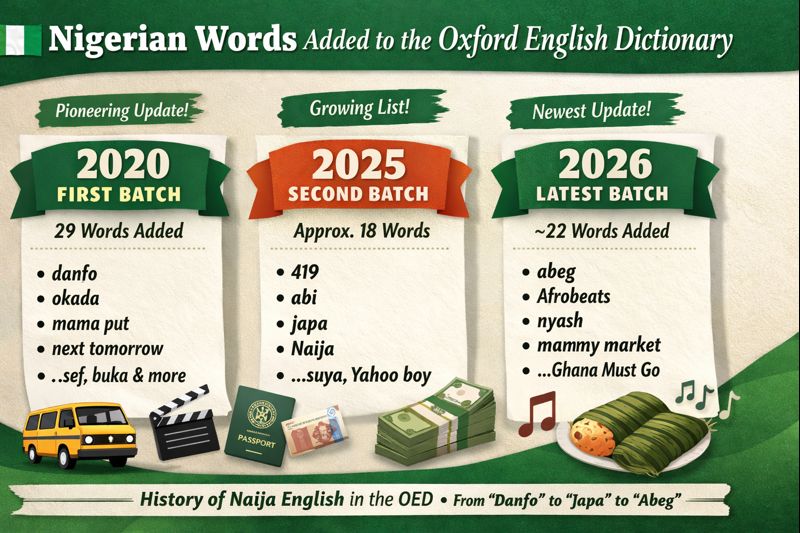
The Oxford English Dictionary has officially incorporated a range of Nigerian and West African expressions into its global glossary, a move reflecting the expanding influence of Nigerian culture, language, and diaspora communities on English worldwide.
Among those now recognized are everyday terms such as “abeg” (a colloquial interjection expressing plea or emphasis), “biko” (from Igbo, used politely like “please”), “nyash” (slang for buttocks), “mammy market”, “Ghana Must Go”, “Afrobeats,” and beloved food names like “amala” and “moi moi.”
This newest inclusion builds on a similar update last year when around 20 Nigerian-origin words were also added, indicating ongoing recognition of Nigerian English’s global footprint.
How It’s Been Received
Positive Reception:
Many Nigerian Americans and diaspora communities have celebrated the milestone on social media as a meaningful validation of Nigerian speech and cultural identity within global English.
The inclusion of terms like abeg and afrobeats, already widely used internationally through music, memes, and conversations is thought to be a long overdue recognition of everyday linguistic influence.
Cultural Pride & Representation:
For members of the diaspora, seeing words rooted in food, music, and Pidgin reflect not just colloquial use but both cultural expression and lived experience has sparked pride. It’s been described as recognition that Nigerian pop culture and language are shaping English on a global scale.
Some users have highlighted that this inclusion helps bridge cultural understanding, giving non-Nigerians a chance to learn meanings and contexts that were once opaque outside Nigerian communities.
Mixed Views:
A smaller group has raised questions about how dictionaries decide which colloquialisms qualify, or whether such entries validate Nigerian English as “proper,” echoing earlier debates about language standards and legitimacy. But overall, reactions remain largely positive and enthusiastic.