
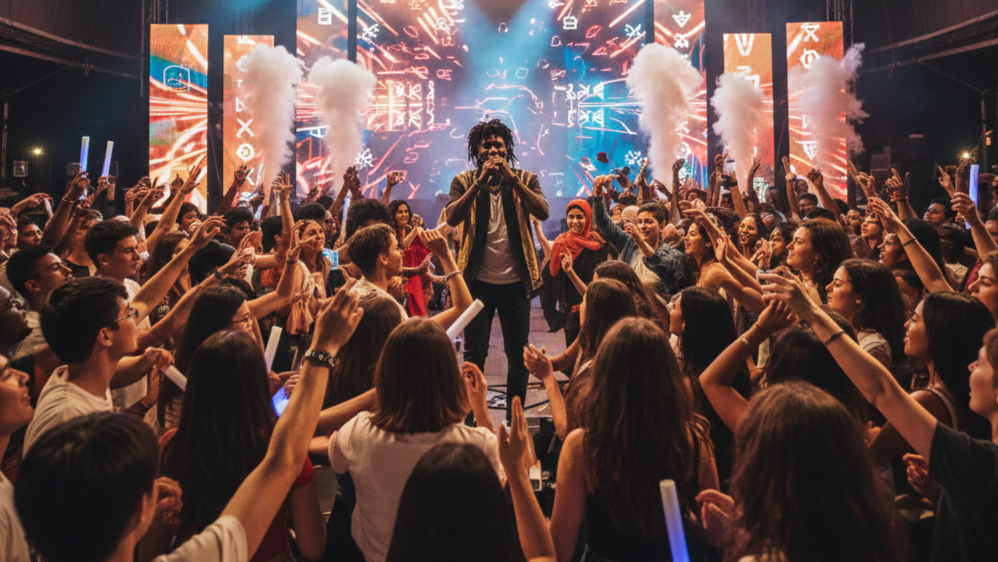
Music has always been humanity's universal language, but few genres have demonstrated the power to advance multiculturalism quite like Afrobeats. This isn't just about catchy rhythms dominating global playlists—it's about how Nigerian sound is actively reshaping how diverse communities understand, connect with, and celebrate each other. For the Nigerian diaspora, this moment represents something profound: our culture isn't just being tolerated or acknowledged—it's being embraced, remixed, and celebrated as the cool factor the world didn't know it needed.
The Multicultural Architecture of Afrobeats
Afrobeats is fundamentally a multicultural musical phenomenon that comprises Ghanaian sounds like hiplife and banku, Nigerian sounds such as highlife and juju music, and various musical elements from traditional West African music. But its multiculturalism extends far beyond its African roots. The genre picks up on trends from the U.S., Jamaica, and Trinidad, reimagines diasporic influences and often completely reinvents them.
This is music born from cultural conversation, not cultural isolation. It's the sound of a globalized generation that refuses to choose between identities, instead creating something entirely new from the fusion.
Breaking Down the Walls: Cross-Continental Dialogue
The most remarkable evidence of Afrobeats as a multicultural bridge is happening right now across the Atlantic. In 2025, Afrobeats listenership in Latin America grew by more than 180% year-on-year, with Argentina and Mexico witnessing more than 400% growth in Afrobeats streams since 2020, while Brazil has seen a 500% surge in the same period.
But here's where it gets fascinating: this isn't one-way cultural consumption. Colombian artist Kapo broke out in 2024 with Afrobeats-inspired tracks like "Ohnana" and "Uwaie," both of which charted on the Billboard Global 200, with "Ohnana" earning him his first Billboard No. 1 on the Latin Rhythm Airplay. Latin American artists aren't just listening—they're actively reinterpreting Afrobeats through their own cultural lens, creating hybrid sounds that belong to everyone and no one exclusively.
The music is coming full circle due to the shared DNA forged centuries ago through cumbia's African drumming traditions, which blended with local flute melodies and European harmonies. What we're witnessing is a rhythmic reunion—communities separated by oceans reconnecting through sound.
The European Transformation
In Europe, Afrobeats has become the soundtrack to multicultural integration. Festivals like Africa Oyé in Liverpool, celebrated as the UK's largest free festival of African and Caribbean music and culture, and Afro Nation in Portugal draw diverse audiences, offering platforms for intercultural exchange and inviting people of all backgrounds to engage with Black cultural heritage.
In the UK, the Afrobeats movement came with—or triggered—a new sense of pride among African immigrants about their origins; for a long time, they were made to feel ashamed of their parents' strong accents and culture, leading them to deny their African heritage and pretend they were from the Caribbean. Afrobeats flipped that narrative entirely. Suddenly, being Nigerian, Ghanaian, or broadly African wasn't something to hide—it became aspirational.
Why "Nigerian DNA" Became Cool
The phrase "Nigerian DNA" has taken on new cultural weight in this Afrobeats era. It's not just about genetics—it's about cultural inheritance that the world now recognizes as valuable. Davido's breakthrough hit "Fall," with over 298 million views on YouTube, depicts urban Nigerian life through vibrant imagery that serves as a potent counter-narrative to monolithic portrayals of Africa as impoverished or underdeveloped.
African artists like Burna Boy, Wizkid, Tems, Diamond Platnumz, Amaarae, and Ayra Starr have used their music to personify the diversity of African identities, moving away from the colonial concept of African identity being monolithic, emphasizing self-acceptance, autonomy, and cultural pride. This visibility matters because it replaces decades of negative stereotypes with authentic, multidimensional representations.
For diasporans, this cultural shift is deeply personal. The popularity of Afrobeats aligns seamlessly with more exposure to African culture in general among Western audiences, evidenced by figures like South African Trevor Noah's prominence and even Beyoncé sampling Nigerian author Chimamanda Ngozi Adichie. Our cultural references—the slang, the fashion, the attitude—are no longer niche. They're mainstream.
The Festival as Multicultural Laboratory
The 21st century has seen African music festivals evolve into global phenomena, fueled by the rise of Afrobeats and the increasing connectivity of the African diaspora, with events like Afrochella launched in Ghana in 2017 becoming synonymous with Detty December, the annual holiday season when diasporic Africans return to the continent.
Portugal's Afro Nation 2025 was an exemplar of continental convergence, with a lineup reflecting the current trajectory of African music—diverse, experimental, and willing to blur genre lines, featuring Afrobeat, Amapiano, dancehall, and drill, with Francophone stars like Booba and Naza enjoying robust sets. These festivals aren't just concerts—they're physical manifestations of multicultural society, where people from dozens of countries gather to celebrate shared rhythms regardless of language, race, or origin.
Building Bridges Through Dance
Perhaps no aspect of Afrobeats demonstrates its multicultural power more than dance. The explosion of dance videos on TikTok demonstrates that language is no barrier to the acceptance and popularity of the music, with CKay's "Love Nwantiti" becoming the most Shazamed song in the world thanks to its TikTok popularity.
Dance challenges create instant global communities. A teenager in Seoul learns the same moves as someone in São Paulo, both connecting to music from Lagos. These aren't superficial interactions—they're genuine cultural exchanges happening millions of times daily, each one chipping away at the barriers that separate us.
The Diaspora's Unique Role
Between 2017 and 2022, Afrobeats streams on Spotify surged by 550%, with streams coming from all over the globe, cumulatively reaching 13 billion streams, and in 2023, Afrobeats spurred the introduction of an African music category at the Grammy Awards. But the Nigerian diaspora has been central to this explosion.
Nigeria's over 200 million-strong population comprises a middle class that ranks among the world's most migrated, with Nigerian populations in many parts of the world; members of the Nigerian diaspora are enthusiastic about concerts with their favorite Afrobeats stars, and while streaming is unaffordable for many in Nigeria, the diaspora Nigerian is able to afford streaming.
We've been the cultural translators, the early adopters who introduced Afrobeats to our non-Nigerian friends, the festival attendees who made events economically viable, the streaming subscribers who pushed songs up algorithms. The diaspora didn't just witness this cultural revolution—we engineered it from our positions between worlds.
The Deeper Implications
What makes Afrobeats such an effective tool for advancing multicultural society isn't just its sonic appeal—it's what the music represents. As a cultural movement, Afrobeats can empower nations through cultural diplomacy and by fostering cross-cultural understanding and active participation in global conversations, with cultural figures showcasing the transformative power of art.
When a Mexican teenager streams Burna Boy, when a French DJ spins Ayra Starr, when a German crowd sings along to Asake in Yoruba—these aren't just entertainment moments. They're acts of cultural recognition and respect. They signal that Nigerian creativity has value, that African perspectives matter, that our stories deserve global stages.
The Challenges We Must Navigate
Real talk—this cultural moment comes with complications. The commercialization of Afrobeats raises questions about authenticity and who profits from African cultural exports. There are legitimate concerns about Western corporations and non-African artists appropriating Afrobeats aesthetics without proper attribution or compensation to African creators.
Moreover, as Afrobeats becomes more globally palatable, there's pressure to sanitize or westernize the sound. Some worry the genre's African identity might be diluted as it scales. The diaspora has a responsibility here—to celebrate Afrobeats' global success while ensuring the genre remains rooted in and beneficial to African communities.
What This Means for Diasporans
For Nigerians abroad, the Afrobeats phenomenon has fundamentally altered how we navigate multicultural spaces. We no longer have to explain or justify our cultural practices. Our parents' accents that once embarrassed us now sound like home in a way that makes us proud. The food, the fashion, the phrases—they're no longer markers of otherness but badges of cultural capital.
This matters for our children even more. They're growing up in a world where Nigerian identity isn't a liability but an asset. They see African artists headlining festivals, fronting luxury campaigns, breaking streaming records. They understand intuitively what we had to learn the hard way: that our heritage is something to celebrate loudly, not hide quietly.
Music as Blueprint for Multicultural Society
Afrobeats demonstrates what genuine multiculturalism looks like in practice. It's not about assimilation—Nigerian artists didn't succeed by sounding less African. It's not about tolerance—the world doesn't merely "accept" Afrobeats, it actively craves it. Instead, it's about mutual exchange, where cultures influence each other, creating something new while maintaining distinct identities.
Through music festivals, collaborations, and media exposure, developing countries can showcase their artistic prowess, challenging stereotypes and preconceptions, with Afrobeats joining other Afro genres such as hip hop, rap, R&B, reggae, and calypso as a catalyst for fostering cross-cultural understanding and appreciation.
This is the model: not erasing differences but celebrating them, not demanding conformity but encouraging creativity, not building walls but constructing bridges made of rhythm and melody.
Looking Forward
The "coolness of the Nigerian DNA" isn't about genetic superiority or cultural supremacy—it's about the world finally recognizing what we've always known: that Nigerian creativity, resilience, and innovation have global value. Afrobeats is proof that when given fair platforms and genuine opportunities, African artistry doesn't just compete—it dominates.
For the diaspora, this is both validation and responsibility. We're living through a cultural moment that our parents could barely imagine—when being visibly, audibly, proudly Nigerian is an advantage rather than an obstacle. We must steward this moment carefully, ensuring Afrobeats continues building bridges rather than becoming another cultural commodity stripped of its roots.
Music has always had the power to unite people across divides. But Afrobeats is doing something more—it's actively advancing a vision of multicultural society where African voices lead rather than follow, where diversity is genuinely celebrated rather than merely tolerated, and where the "Nigerian DNA"—that complex mix of creativity, resilience, joy, and innovation—is recognized not as exotic but as essential to our shared global culture.
The beat has broken the borders. Now it's up to us to ensure what's built in its wake is a world that's genuinely multicultural—not just in theory, but in practice, one rhythm at a time.