
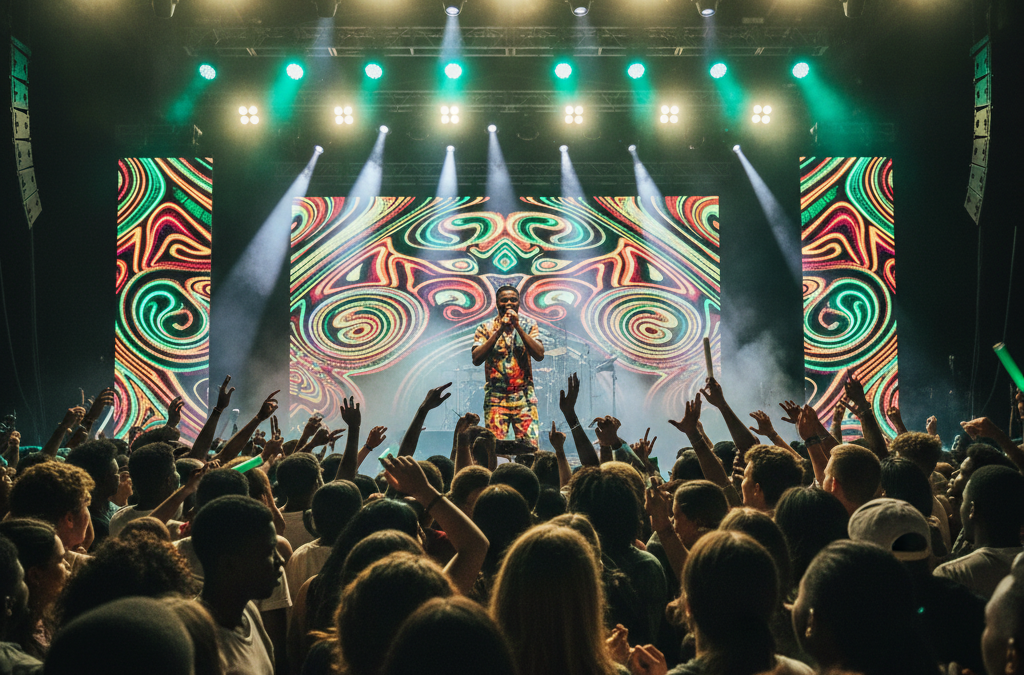
When you're thousands of miles from home, music becomes more than entertainment—it becomes your lifeline to who you are. For Nigerian diasporans, Afrobeats has grown from being just a genre of music to becoming a lifestyle, a cultural export, and for many young people, a major shaper of identity. But this isn't just nostalgia in rhythm. It's a full-blown identity revolution happening in real time.
The Numbers Tell a Powerful Story
Between 2017 and 2022, Afrobeats streams on Spotify surged by 550% with over 13 billion streams in 2022 alone. Artists like Burna Boy, Wizkid, Tems, and Ayra Starr aren't just making music—they're rewriting how the world sees Africa. In March 2024, Tems became the first African singer to be awarded a Billboard Women in Music Award and the first Nigerian artist to debut at number 1 on Billboard's hot 100 charts for her collaboration with Future and Drake. These aren't just career milestones—they're cultural earthquakes.
Why This Matters to Us in the Diaspora
For years, being visibly Nigerian abroad meant navigating stereotypes. It wasn't exactly "cool" to speak in African accents or dialects, as Eurocentrism inflicted internalized shame on Africans for simply being African. But Afrobeats flipped that script entirely. For Nigerians in the diaspora, the recognition of Nigerian terms and culture affirms identity, fosters pride, and offers reassurance that their everyday language and cultural references are valid, visible, and valued on the world stage.
Through Afrobeats, young Africans no longer navigate identity through duality; instead, they celebrate it through fusion—proudly Nigerian-British, Ghanaian-American, or Afro-French, all at once. It's not about choosing between here and home anymore. We can be both, loudly and unapologetically.
The Cultural Reconnection
Cultural festivals like Afro Nation, Coachella, Rolling Loud, and Afrochella have become homecomings where fans from every corner of the world travel to immerse themselves in African rhythm, fashion, and food—reconnecting with the continent not as visitors, but as family. Even Asake's music, mostly sung in Yoruba, has sold out arena shows in the U.K., France, Germany, and Portugal, with audiences largely unfamiliar with Yoruba singing along flawlessly, proving Afrobeats transcends language barriers.
But It's Not All Perfect
Real talk—we also need to acknowledge the complications. A 2025 article highlights that the portrayal of opulent lifestyles by Afrobeats artists has contributed to a "quick-money mindset" among Nigerian youth, with concerns about glamorizing materialism and risky behaviors. Some songs have sparked debate about normalizing harmful acts or presenting fraud as legitimate hustle. As much as we celebrate the culture, we can't ignore these tensions.
The Bigger Picture
Afrobeats positions Nigeria as a trendsetter in fashion, language, dance, and lifestyle, influencing global youth culture and giving the nation a renewed voice in creative spaces. For decades, Nigeria's international narrative was dominated by negative headlines. Now, when investors and international audiences engage with Nigeria, they're approaching with curiosity and respect rather than skepticism.
For us in the diaspora, this matters deeply. It means our kids can grow up proud of their heritage without apology. It means when we introduce ourselves, people associate Nigeria with creativity and innovation, not just crude stereotypes. It means home is having its moment—and we're here to witness it, amplify it, and ensure it doesn't fade.
Afrobeats isn't just the soundtrack to our parties. It's the anthem of our cultural renaissance.