
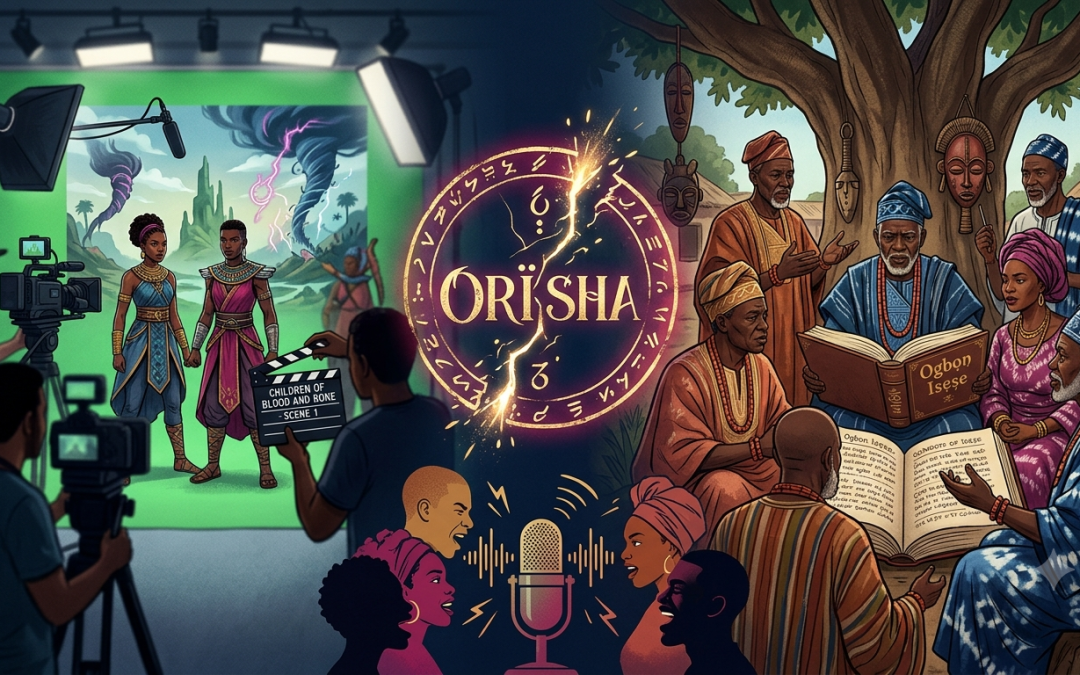
Before Children of Blood and Bone has even hit theaters, it's already sparked one of the most heated cultural conversations of the year. The film adaptation of Tomi Adeyemi's bestselling fantasy novel isn't due in cinemas until January 2027, but the release of its first trailer was enough to ignite debate across Nigeria and the diaspora about who gets to tell — and shape — African stories.
The Film
Set in the fictional kingdom of Orïsha, the story draws heavily on Yoruba spirituality, folklore, and cosmology, blending it with a fantasy narrative about power, oppression, and magic. It's not a historical retelling of Yoruba culture — it's fiction inspired by it. With a strong cast, including Nigerian talents like Richard Mofe-Damijo, Ayra Starr, Temi Fagbenle, and Zackary Momoh, plus major studio backing, the production has all the markings of an ambitious, big-budget fantasy epic.
The Initial Response
Nigerian audiences — Yoruba speakers in particular — didn't hold back once the trailer dropped. The excitement over seeing Yoruba-inspired mythology on a global stage quickly gave way to unease. Many viewers felt something essential had been lost in translation, both literally and culturally.
The Core Issues
Three concerns have dominated the conversation:
1. Pronunciation and language integrity. Yoruba is a tonal language, meaning the pitch used to say a word can completely change its meaning. Critics argue the film's dialogue lacks that tonal precision, turning what should be meaningful language into something that merely sounds Yoruba-adjacent.
2. Where it was filmed. Much of the production took place in South Africa and the Canary Islands rather than Nigeria. From a business standpoint, that's understandable — South Africa has spent two decades building world-class studios, crews, and production incentives. But for a story so rooted in Yoruba heritage, many are asking why more of the actual production wasn't based where the culture comes from.
3. Limited Nollywood involvement. Beyond a handful of Nigerian actors, critics say the broader Nigerian creative ecosystem — cinematographers, costume designers, language consultants, production artists — wasn't meaningfully engaged.
Adding fuel to the debate, author Tomi Adeyemi — who co-wrote the screenplay and was originally attached as executive producer — recently announced she won't watch or promote the finished film, citing a difficult production experience. Her stepping back removes a key source of legitimacy from the adaptation, right as scrutiny is at its highest.
Why It Matters
At its heart, this isn't really about one film. It's about what African audiences now expect from global adaptations of their stories: not just visibility, but authorship, linguistic respect, and a real economic stake in the industries built around their culture. Representation used to be the goal. Now, the bar has moved.