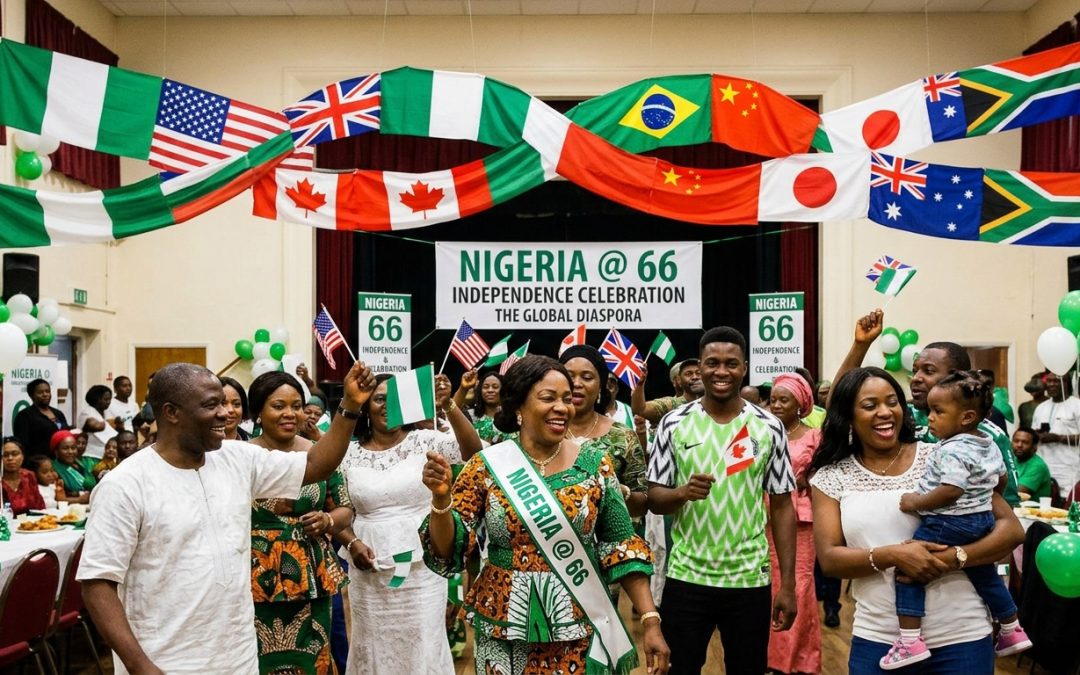
From Manhattan to London and Los Angeles, Nigerians turned cities around the world Green and White. One flag. Many cities. A global Nigerian diaspora celebrates 66 years of independence. Afrobeats, Ankara and Naija Pride: Nigeria at 66 Goes Global.
You could almost hear Nigeria before you saw it.
The bassline of Afrobeats spilling from speakers. The flash of green-and-white outfits moving through crowds. Ankara, agbada and gele sharing space with sneakers and Nigerian football jerseys. Somewhere nearby, the unmistakable aroma of jollof rice, suya and other familiar tastes of home.
From Manhattan to Downtown Los Angeles, from London dance floors to Toronto gatherings, Nigerian Independence Day 2026 became something much bigger than an anniversary.
For a few remarkable days, the Nigerian diaspora transformed pieces of cities thousands of miles from Lagos into extensions of home.
Nigeria turned 66 on October 1. Across the diaspora, the celebration continued through the weekend.
New York: Green and White Takes Manhattan
Few things announce diaspora presence quite like shutting down streets in Manhattan.
On Saturday, October 3, New York City's official traffic schedule listed the Nigeria Independence Day Parade and Festival, with the procession running along Second Avenue in Midtown and a festival area on East 47th Street.
Social-media promotion around the celebration had already generated excitement, with organizers OAN NYC promoting Afrobeats star BNXN as a headline attraction.
But the significance went beyond entertainment.
A Nigerian parade through New York is a public declaration: we are here.
Children born in America can watch their parents' flag carried through one of the world's most recognizable cities. First-generation immigrants can celebrate the country that shaped them while embracing the city they now call home.
That intersection—Nigeria and America, heritage and belonging—is where diaspora culture becomes especially powerful.
Los Angeles: One Day. One Culture. One LA.
Across the country, Downtown Los Angeles went unmistakably Naija.
NaijaFest LA '26 took over Gloria Molina Grand Park on October 3 under the theme “United by Culture.” The free, family-friendly festival brought together music, dance, fashion, food, vendors and community in the civic heart of Los Angeles.
The lineup reflected just how global Nigerian popular culture has become: Mr. P of P-Square headlined, alongside King Kanja and Meaku, with Seyi Brown hosting and DJs keeping Afrobeats moving through the park.
This was more than a concert.
Parents came with children. Traditional fashion met contemporary streetwear. Nigerian food and entrepreneurship shared space with live entertainment.
In Southern California—thousands of miles from Nigeria—the community was doing something diasporas have always done: turning celebration into cultural preservation.
London: Nigeria After Dark
If Los Angeles offered the family festival, London demonstrated another side of modern Nigerian identity: nightlife as cultural export.
On October 2, FirstBank UK and the Nigeria High Commission hosted an Independence celebration bringing together community leaders, diplomats and business figures.
Then London changed gears.
Across the weekend, Nigerian Independence events appeared throughout the city's nightlife calendar. TakeOver x HypeHaus staged an Independence special at THEATA headlined by Darkoo, while other venues advertised Green-and-White parties mixing Afrobeats culture, Amapiano, R&B and Nigerian sounds deep into the night.
That combination says something about today's diaspora: Nigerian identity can occupy the diplomatic ballroom and the dance floor with equal confidence.
Toronto: The Flag Flies Far From Home
Canada added its own chapter.
Toronto officially raised the Nigerian flag at City Hall on October 1 to recognize Nigeria's Independence Day.
By Saturday night, celebrations had moved onto the dance floor. A Toronto Nigeria Independence Day Celebration featured DJs, hosts, food, music and the familiar communal energy of Nigerians gathering abroad.
Elsewhere in Canada, Winnipeg marked the anniversary with a flag-raising ceremony at City Hall attended by civic officials and members of the Nigerian community—an event that also celebrated the Nigerian Association of Manitoba's 40th anniversary.
More Than a Party
And the celebration stretched further.
Oakland's Independence weekend included an Afrobeats-focused gathering with DJs, live performances and Nigerian food, while Houston's weekend calendar carried multiple Nigerian Independence parties before the city's larger cultural parade later in October.
Different cities. Different accents. Different generations.
But everywhere, the same Green and White.
That may be the bigger story of Nigerian Independence Day in the diaspora.
Nigeria today is not contained within Nigeria's borders. Its music travels. Its fashion travels. Its food travels. Its language and humor travel. Most importantly, its people carry pieces of home with them—and then teach their children to carry those pieces forward.
For one weekend, Nigerians across the world weren't simply remembering independence.
They were demonstrating the extraordinary global reach of Nigerian culture.
How did your city celebrate Nigeria at 66? Send us your photos, videos and stories. Tell us where you celebrated, who organized it and what made the moment memorable.
Let's build the global picture together.